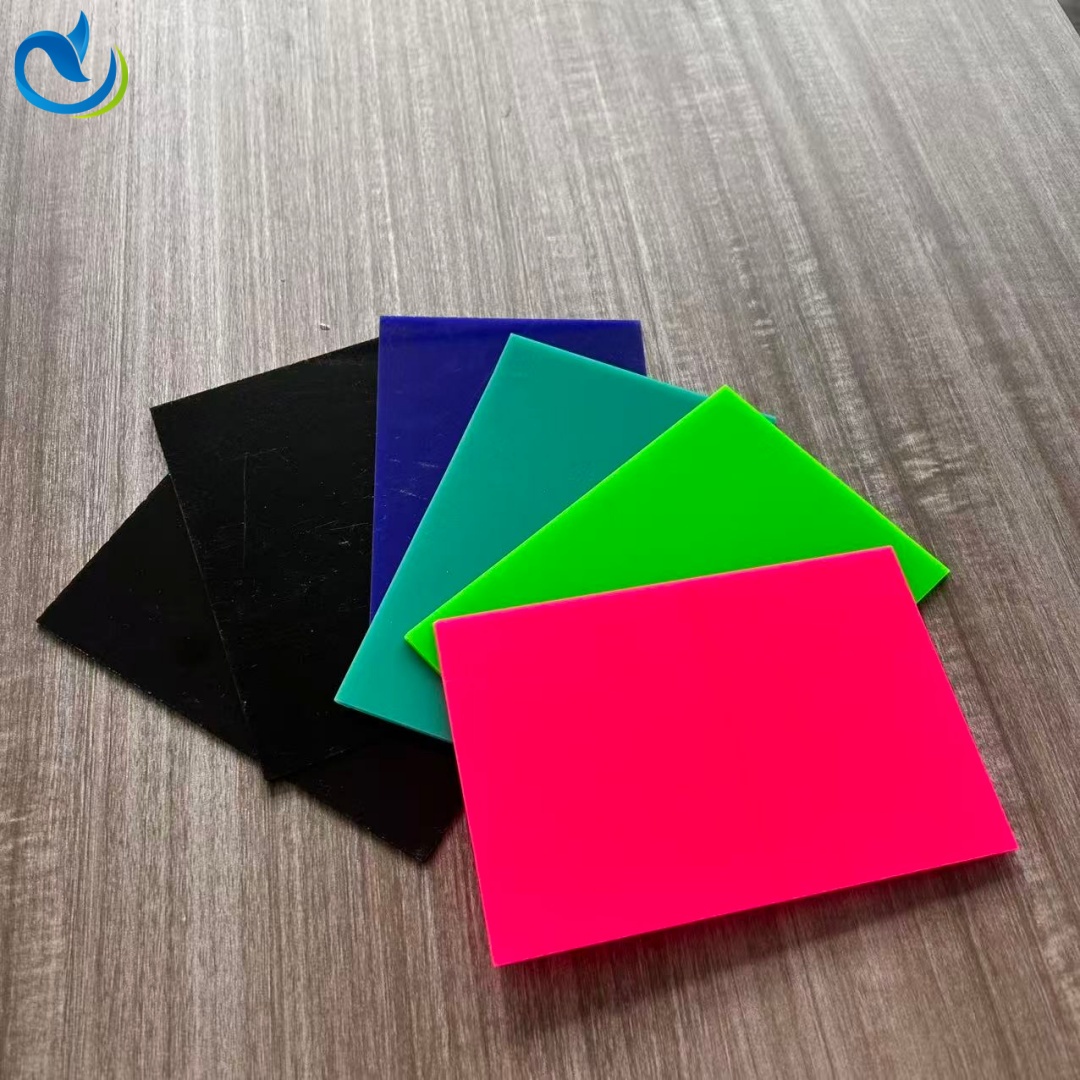
The budding of technology. The history of colored acrylic can be traced back to the period of World War II.In 1941, the United States Air Force aimed to enhance the optical camouflage performance of aircraft cockpit canopies.Commissioned Rohm and Haas to develop light-filtering colored acrylic materials.By adding metal oxides such as cobalt blue and chrome yellow to the methacrylic acid monomer.The first batch of army green and sky blue acrylic was created in a Pennsylvania laboratory.These materials not only need to maintain a light transmittance of over 92%, but also need to withstand extreme temperatures ranging from -55℃ to 120℃.This military project, codenamed ‘Eagle Eye,’ unexpectedly laid the technical foundation for modern colored acrylic.
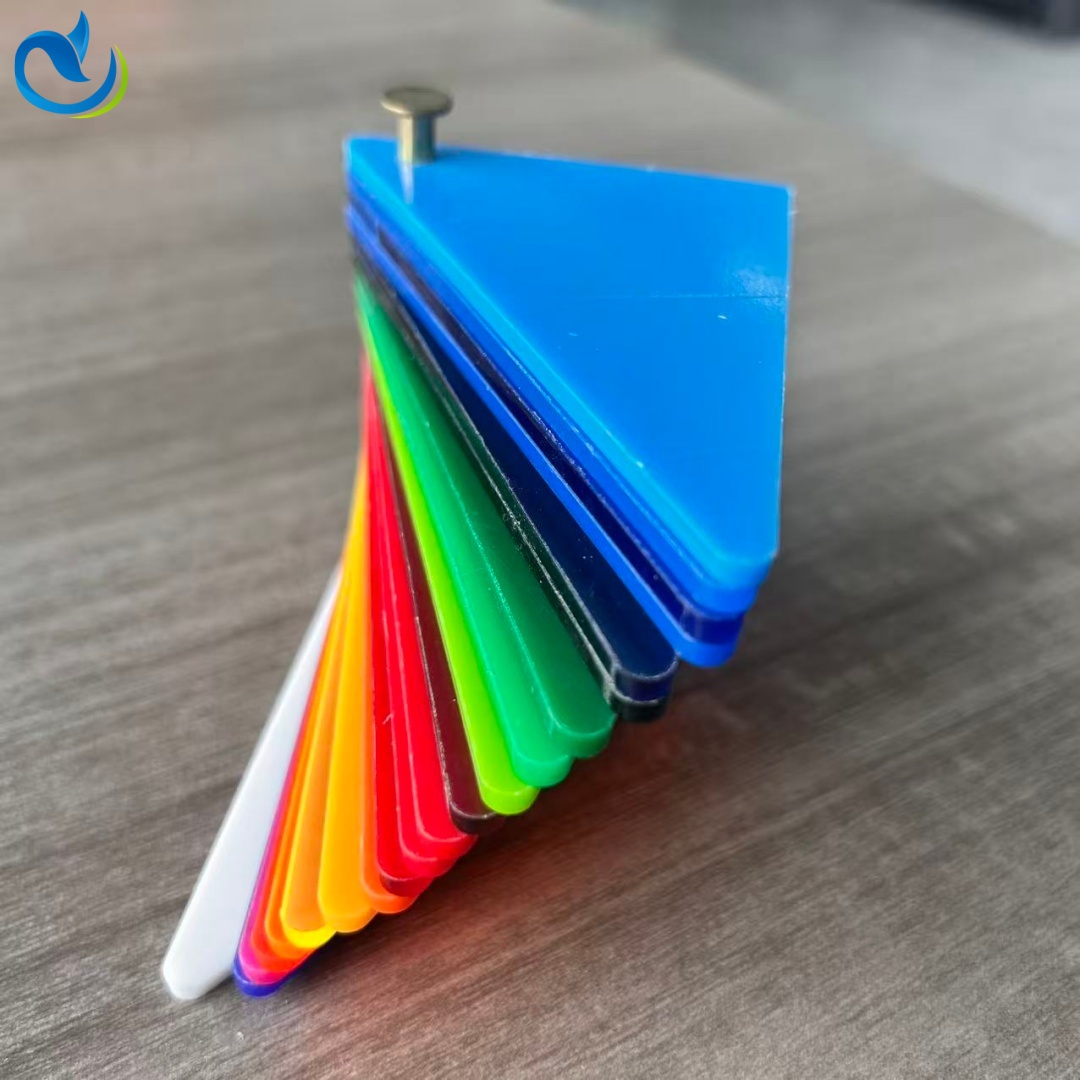
Civilianization breakthrough. The patent liberalization after the war gave rise to the first wave of color innovation.In 1953, the German company Röhm launched the world’s first set of standard color swatches for civilian use in colored acrylics, including 12 basic shades such as Diamond Blue, Amber Yellow, and Rose Red.The revolutionary breakthrough lies in the adoption of the “core coloring” process: organic dyes are uniformly mixed with MMA monomers before polymerization, allowing the color molecules to undergo deep cross-linking rather than being merely a surface coating.This technology enabled the Museum of Modern Art in New York to build the world’s first gradient blue acrylic art dome in 1958, with color stability proven through 3,000 hours of sun exposure testing.
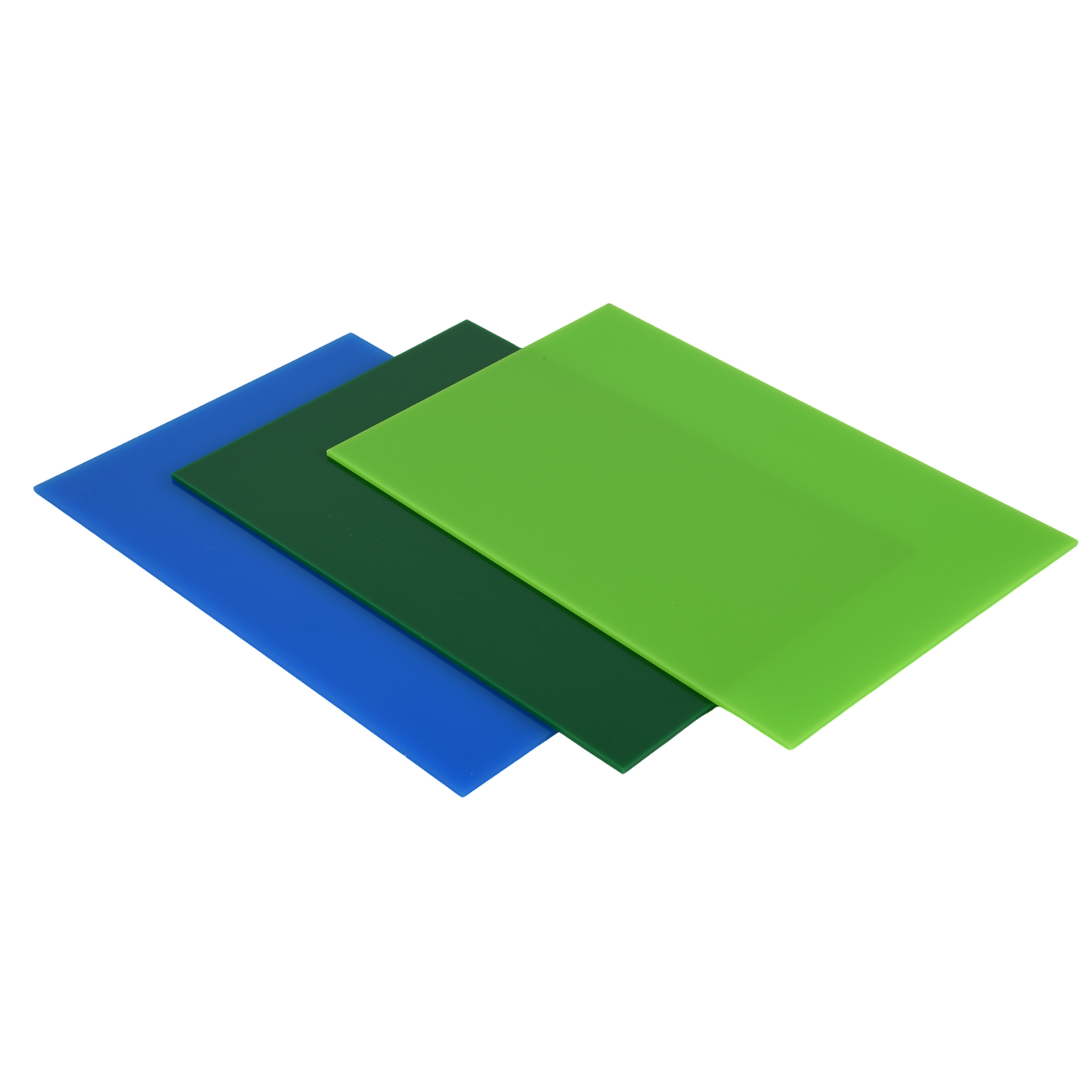
Made in China. China’s colored acrylic industry achieved a technological breakthrough after 2010.In 2016, a certain enterprise completed the construction of its first 10,000-ton color optical-grade PMMA production line. The “magnetron sputtering coloring technology” developed by them can precisely inject metal ions into the surface of the sheet to a depth of 10 micrometers, achieving the unity of metallic texture and high light transmittance.
Future outlook. The cutting-edge laboratory is exploring fourth-generation intelligent colored acrylic.In China’s “14th Five-Year Plan” for new materials, a temperature-sensitive color-changing acrylic with environmental sensing capabilities has been included in the key research projects – in the future, the exterior walls of buildings may be able to autonomously adjust between light blue and dark gray based on temperature, achieving the ultimate integration of aesthetics and functionality.